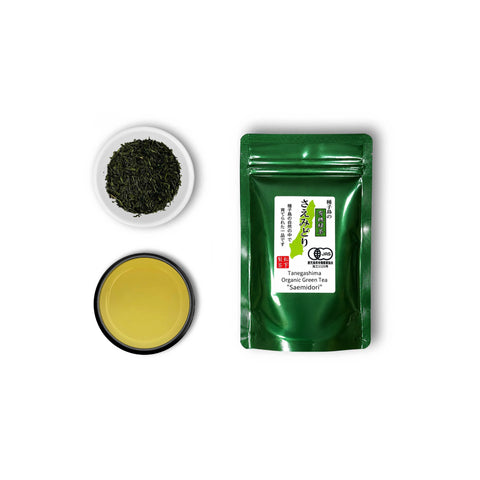
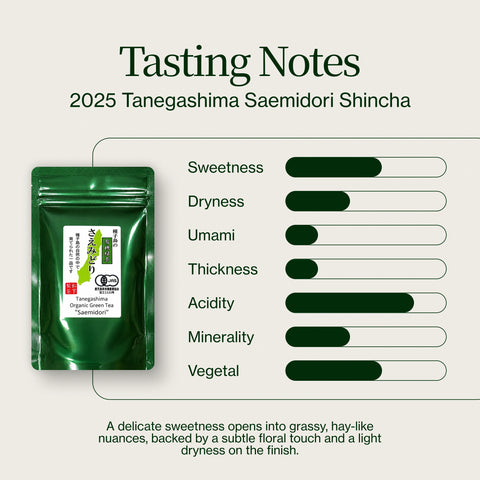
Shincha is the first tea of the year, picked from the season's opening flush and sold within weeks of being made. Japanese growers count 88 nights from the start of spring — hachijuhachiya, around the beginning of May — as the traditional moment to harvest. The plant has spent the winter storing amino acids, so the first leaves carry more sweetness and a bright, almost fruity aroma that later harvests never quite match. That aroma is also the reason shincha is drunk young: it fades over the months, and by autumn the same tea has settled into an ordinary sencha. Brew it like a sencha, a touch cooler, and drink it while it is new.
Artigiano del tè: Signor MatsushitaKagoshima
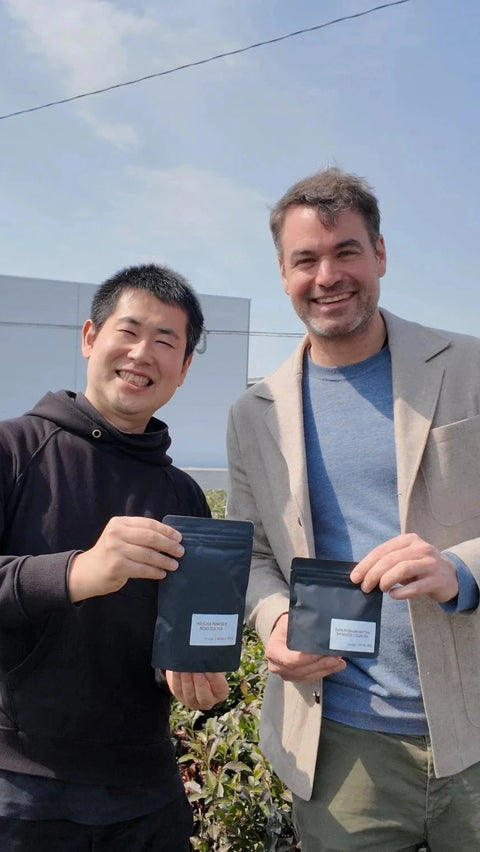
Signor Eiichi Matsushita È un coltivatore di tè di quarta generazione che vive nella rigogliosa isola di Tanegashima . Come molti maestri del tè esperti, supervisiona personalmente il processo di vaporizzazione per garantire un sapore e una consistenza perfetti. La sua famiglia coltiva il tè sull'isola dal 1909, anno in cui si trasferì da Shizuoka portando con sé la propria conoscenza della coltivazione del tè. Il signor Matsushita ha anche ricoperto la carica di Presidente dell'Associazione delle Fabbriche Arasha Tanegashima per 12 anni. I suoi campi si trovano in una delle migliori regioni dell'isola per la coltivazione del tè verde e producono foglie di alta qualità ogni primavera.
Origine: TanegashimaGiappone
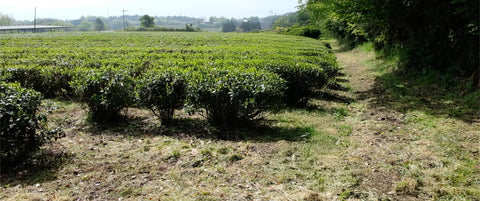
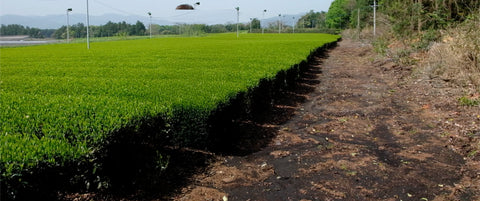
Le piantagioni di tè del signor Eiichi Matsushita sono immerse negli altopiani settentrionali di Tanegashima , una pittoresca isola situata a circa 115 chilometri a sud di Kagoshima . Questa zona beneficia di un clima caldo subtropicale e di brezze oceaniche che portano aria ricca di minerali e nebbie mattutine, condizioni ideali per la produzione Shincha all'inizio della stagione. I campi si trovano a 223 metri sul livello del mare, il che li rende i più alti di Banyamine e una delle zone di coltivazione del tè più pregiate dell'isola.
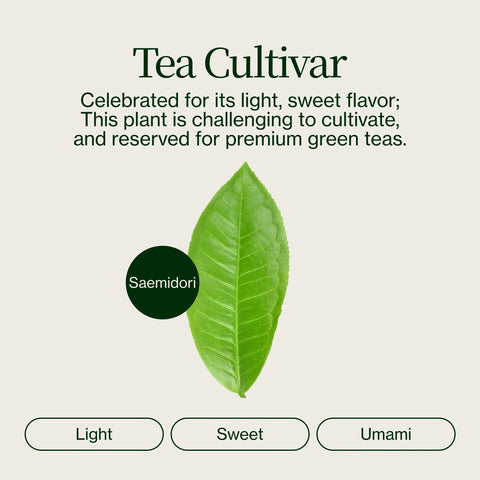
Cultivar: SaemidoriVarietà di tè
Saemidori: Saemidori è una pregiata varietà di tè giapponese, apprezzata per la sua morbidezza e il suo colore vibrante. Incrocio tra Yabukita e Asatsuyu , combina il ricco sapore umami di quest'ultimo con la struttura equilibrata del primo. Questa varietà germoglia precocemente, il che la rende una scelta eccellente per la produzione shincha di alta qualità. Quando viene trasformato in sencha o shincha , Saemidori offre un infuso di un verde brillante con un delicato aroma floreale, una dolcezza vellutata e un finale pulito e rinfrescante con una minima amarezza.
Preparazione e presentazioneFino a 60 tazze
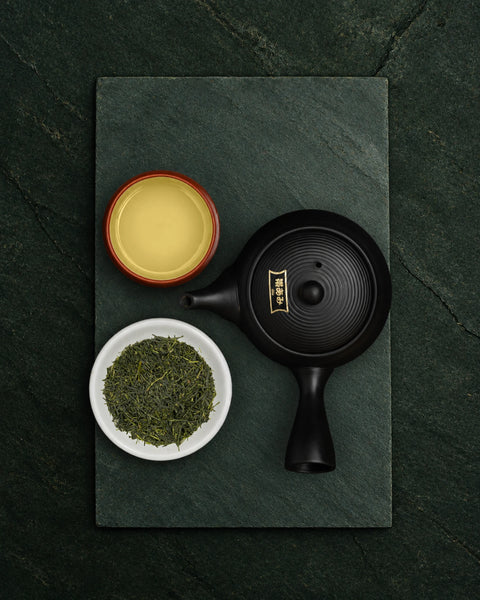
Caffè caldo: 5 g di foglie, 150 ml di acqua a 60 °C (140 °F), 1 minuto.
Preparalo di nuovo: Le stesse foglie permettono di ottenere 3 infusioni. Reinfondere altre 2 volte con acqua alla stessa temperatura, per 20 secondi ogni volta; ogni infusione avrà un sapore leggermente diverso.
Caffè freddo: Si gusta al meglio caldo; sconsigliamo di preparare questo tè a freddo.
Una confezione: Fino a 60 tazze · 20 porzioni da 5 g, 3 infusioni ciascuna · 100 g / 3,5 oz.
Perché scegliere Nio Teas ?
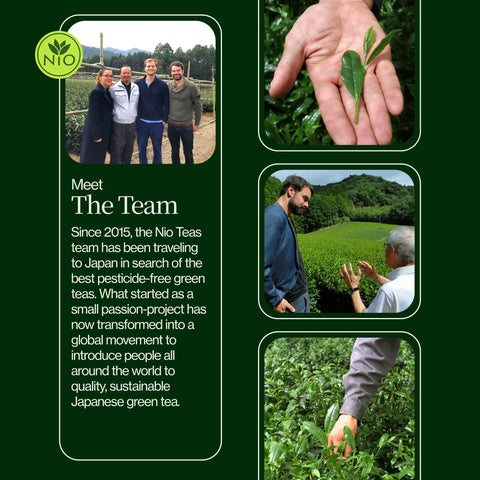
Per noi, il tè è più di una semplice bevanda, è uno stile di vita. Abbiamo trascorso anni visitando piantagioni di tè in tutto il Giappone, degustando tè con chi li coltiva e costruendo relazioni dirette e durature. Crediamo che questo sia il modo più sostenibile di approvvigionarsi di tè: meno intermediari, maggiore tracciabilità e un legame più stretto tra produttore e consumatore.
Ogni tè è al 100% privo di pesticidi e accuratamente selezionato per il suo gusto, la sua origine e la sua lavorazione. Che tu stia scoprendo il tè giapponese o confrontando cultivar e terroir, troverai note di degustazione sincere, precise indicazioni per l'infusione e un supporto concreto per aiutarti a ottenere il meglio da ogni tazza.
Valori tipici per 100 ml di tè preparato, tratti dalle Tabelle Standard di Composizione degli Alimenti in Giappone (MEXT, 8a edizione), infuso sencha (alimento n. 16037; 10 g di foglie, 430 ml di acqua a 90 °C, 1 min). I valori nella vostra tazza possono variare a seconda del tipo di foglia, dell'acqua e del tempo di infusione.
Completa il tuo rituale del tèNo Kyusu at home? No problem!
100% senza pesticidiDirettamente dagli agricoltoriPuro e non miscelatoTerroir di origine unicaRaccolta in piccoli lottiAutentico artigianato giapponese
Unveiling Shincha's Superfood Power
•
Caffeina
Caffeina naturale per una carica delicata e duratura.
•
Antiossidanti
Ricco di catechine e altri antiossidanti naturali.
•
Clorofilla
Naturalmente ricco di clorofilla, il pigmento responsabile del vibrante colore verde del matcha .
•
Potassio e calcio
Minerali presenti in natura che contribuiscono al profilo nutrizionale del matcha .
•
L -teanina
Un amminoacido presente naturalmente nel tè, associato a una sensazione di calma e concentrazione.
•
Vitamine A, C, E e K
Contiene una gamma di vitamine naturalmente presenti nell'intera foglia di tè.
Provalo con fiducia. Se non fa per te, contattaci entro 30 giorni.
15 coltivatori di tè giapponesi
Il nostro tè unisce la maestria artigianale e la competenza regionale di 15 agricoltori partner in tutto il Giappone.
Direttamente dal produttore alla tazza.
Instauriamo rapporti duraturi con i nostri agricoltori per ridurre gli intermediari e garantire una maggiore tracciabilità.
100% senza pesticidi Shincha
Every Shincha is grown without pesticides, then personally tasted and selected by our team.
How to Make Shincha Like a Pro
Per apprezzare appieno la complessità di questo shincha , consigliamo di prepararlo delicatamente con acqua a bassa temperatura e un tempo di infusione più breve.
Heat the Water
Riscaldare l'acqua a 60 °C (140 °F).
Add the Leaves
Aggiungere 5 g di foglie in una teiera kyusu .
Steep
Versare 150 ml di acqua e lasciare in infusione per 1 minuto.
Pour & Brew Again
Versate via tutta la bevanda, quindi lasciate in infusione le stesse foglie altre due volte (20 secondi ciascuna).
Tè sfuso o in bustine
Ricco di sapore, non di microplastiche.
Contadino: Matsushitaさん
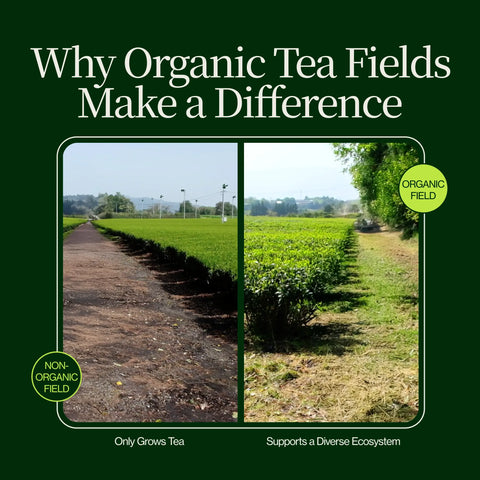
Why Organic Shincha Fields Make a Difference
Le piante del tè assorbono tutto dal terreno, il che rende la coltivazione senza pesticidi particolarmente importante. Gli agricoltori con cui collaboriamo hanno trovato un modo per coltivare un tè delizioso senza danneggiare l'ecosistema naturale.
Da tempo Nio teas è il mio negozio di tè preferito per acquistare prodotti di alta qualità e non mi ha mai deluso. I loro tè sono eccellenti, ma vorrei soffermarmi soprattutto sul servizio clienti: il team di Nio è sempre stato molto gentile e disponibile ogni volta che ho avuto bisogno di assistenza. Il loro servizio clienti è impeccabile, attento e rapido nel rispondere a qualsiasi domanda, ed è per questo che sono una cliente fedele da tanto tempo.
1 aprile 2026
5 out of 5 stars
5/5
Sean
Il mio fornitore preferito di tè verde sfuso biologico giapponese. Selezionano alcuni dei migliori tè biologici dal Giappone e supportano i piccoli agricoltori e l'intero settore del tè biologico in crescita. Ordino da tutti i fornitori da anni e Nio ha sempre i prezzi e la selezione migliori. Offrono anche un servizio clienti eccellente e spedizioni veloci. Altamente raccomandato 🍃
Shipping is free once your order passes the threshold for your country — USD 54.99 · EUR 54.99 · GBP 44.99 · CHF 49.99 · CAD 74.99 · DKK 399 · SEK 599 · PLN 229 · CZK 1,290. Everywhere else it's the equivalent of USD 54.99, converted automatically. Below the threshold a flat rate applies, always shown at checkout before you pay.
We ship from warehouses in the US, the EU and Japan — whichever is closest to you. US and EU orders arrive in 4–12 business days; the handful of countries served from Japan take around 10. Business days count from dispatch rather than from when you order, and exclude weekends and public holidays. You'll get a tracking number by email the moment your parcel leaves the warehouse.
We only buy from fields grown without pesticides or chemicals. We ask each farmer directly how they manage their land, visit the plantation and processing facility ourselves, taste every harvest before committing, and check that the biodiversity around the fields is alive. Small family farms don't always carry paperwork — so we verify it in person instead.
Japanese green tea covers an enormous range, and choosing online isn't easy. If you've tried yours and it isn't for you, email info@nioteas.com within 30 days with your order number and a line on what you didn't enjoy. We'll send a different tea of equal or lower value, free. Nothing to post back — keep it, share it, or try brewing it cooler. Once per order.
Email info@nioteas.com within 30 days with your order number and a photo. We'll approve it, cover the return postage with a prepaid label or a reimbursement, and refund you — no restocking fee. Refunds go to your original payment method within 2 business days of the return reaching us; your bank may take another 5–20 to show it.
Unopened items in their original packaging can be returned within 30 days. Tea is sealed for hygiene, so opened packs can't come back — but the swap above covers exactly that situation. Return postage is yours unless the item arrived damaged, defective or incorrect.
Orders to the US and EU ship domestically from our local warehouse, so there's no customs charge and no duty. A small number of destinations are served from our Japan warehouse, where your own customs authority may apply import duty, VAT or a carrier handling fee on delivery. Those are set by your country, not by us. Ask before you order and we'll help you check.
info@nioteas.com or +41 79 751 83 88. We reply within 2 business days, usually much sooner, in English.
Customer Reviews
Overall rating: 4.9 / 5 from 14 reviews.
This is a nice, tasty shincha with a lovely golden appearance that greens with each successive steep. It has a unique flavor & nice fresh scent. Love the sweetness & vegetal overtones. Not noticeably acidic as the literature claims. Will re-order again next year.
Try ice brewing
Light flavor, pleasant wheaty aroma, sour doughy, tingly on the mouth.
Cardboard mouth, subtly bold, reids, dry grass.
5g 12 min 40C° :
Rich yellow liquor, warm toasted wheat, FULL OF DANCING ANTIOXIDANTS, feel that intense zing. Minerals, licking rocks, limestone, smells of warm bread, reminds me of alishan cream Oolong in smell but not in taste. Im drinking Volcanic rock and chlorophyll!
60C° for a little too long
Barbequed soured zucchinis, not entirely unpleasant though..
Koridashi Ice Brewed (4hrs, 6g on ice mound)
Like biting ito one of those seedy dark brown circle crackers, green pumpkin seeds
Sugarless raisin bran, roasted brown cereals
Bright, almost fizzy, spring tea, light flavor but it compiles into more vibrancy the deeper you brew it. It smells of sourdough and tastes of cabbage, that mild sweetness and drying of a cabbage vein.
Tanegashima Shincha is a true gift.
It has a light body but a grassy and persistent vegetal profile.
The minerality and sweetness are well balanced with the vegetal side.
Second and third brewing are as rich as the first one!
Recommend to brew it in a not glazed tokoname clay teapot.
Let's dive into the art of tea with the brand new Shincha 2024, from the prized Saemidori cultivar (one of my favorites), prepared using the unique Kori Dashi technique, the Japanese infusion with ice!
As the leaves slowly open, they give off a fresh, herbaceous aroma evocative of high mountain meadows. At the sip, the taste is equally fresh, herbaceous but with fruity notes, offering a thick and slightly sticky texture in the mouth.
The persistence is surprising, so much so that it makes the taste buds "fizz" at the sides of the mouth, giving a sensation similar to the one you get after tasting a fresh nectarine.
Follow me at @gong.fu.panda in insta for more tea and matchas reviews!
Wow, The new Saemidori Shincha from Tanegashima is truly amazing! First the smell is so strong of freshness and when it was in the kyusu it smelled like watermelon. After pouring water, it was cereal-like smell. The flavor then when drinking in first brew full of sweetness and mild as well, ofc with the presence of freshness 😝. The second brew becomes more intense and grassy with a hint of umami like matcha! It is soooo sweet!!!! It is present in the palate and dominates it for a long time 🤤🍵. It has also a nice but not aggressive astringensy, it is so balanced with the umami and the sweetness, all of them combined make it so delicious! The third brew was alot weaker in my surprise, lol. Idk if it is a mistake of the 20 sec, but it left my palate again strong. They say, a good tea is good when it is dominant in your palate for a long time. And it is. Lol. I tried a trick to track more of the 3rd brew by eating a small amount of white cheese which is quite acidic. Almost nothing changed, just gave me a hint of the first brew. It was also the presence of freshness. The leaves after the 3rd brew started to smell like a high quality sencha, such as a fukamushi, full of grass presence. I used in all of my brews 60°C and 20 sec, like the package recommendation. I'll make a experiment by making a 4th brew with higher temperature, maybe 70°C~ to see if it'll extract other flavors or more aggressive astringensy 🫣. We'll see 😝. I'm surprised. Even after with high temperature it is still not that astringent with typical sencha! I was right about the temperature. Now the tea is more flavorful. Nice choice to increase the temperature! Of course it has that freshness, not that much sweet, it leaves you dryness in the 4th brew with 70°C though. After the 3rd brew, I recommend to experiment by yourself as you like!
I really enjoyed this shincha! This tea is fresh, has an amazing aroma and potent flavor profile. The qi captures the essence of spring with a rising energy that clears the head. It’s also major plus that it’s organic 🙌 I will definitely grab more while I still can!