
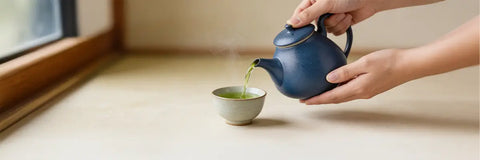
Eine ushirode kyusu ist eine japanische Teekanne mit einem Griff an der Rückseite, der sich direkt hinter dem Ausguss befindet. Sie ist für das kontrollierte, zweihändige Ausgießen konzipiert, im Gegensatz zur einhändigen Bewegung, die bei einer kyusu mit seitlichem Griff üblich ist.
Diese Griffposition verändert die Art der Teekannenbenutzung. Anstelle einer schnellen Handgelenksdrehung wird das Ausgießen zu einer bewussteren Bewegung, die eine bessere Kontrolle über Geschwindigkeit und Neigung ermöglicht, insbesondere beim Servieren mehrerer Tassen.
Im Vergleich zur gebräuchlicheren yokode kyusu ist die Ushirode-Kanne in der Regel größer und besser für die Zubereitung von Tee für mehrere Personen geeignet. Das größere Volumen und der ausgewogene Griff machen sie praktisch für den täglichen Gebrauch und die Zubereitung größerer Mengen.
Der Unterschied liegt nicht nur in der Form, sondern auch im gesamten Brühvorgang. Rhythmus des Einschenkens, Kontrolle und Servierstil verändern sich mit der Position des Griffs.
Dieser Artikel erklärt die Funktionsweise des ushirode kyusu , den Unterschied zum Design mit seitlichem Griff und wann es sinnvoll ist, ihn in die tägliche Teeroutine einzubauen.
Ushirode Kyusu verwendet einen Griff an der Rückseite für beidhändiges, kontrolliertes Ausgießen.

Ein ushirode kyusu ist für das Ausgießen mit zwei Händen konzipiert, wobei eine Hand den Griff bedient und die andere den Deckel stabilisiert. Dies ermöglicht im Vergleich zu einer Teekanne mit seitlichem Griff eine gezieltere Kontrolle über Neigung und Wasserfluss.
Anders als beim Yokode-Stil, bei dem der Griff seitlich um 90 Grad abgewinkelt ist, erfordert das Ushirode-Verfahren beide Hände für ein kontrolliertes Ausgießen. Eine Hand hält den Griff, die andere stabilisiert den Deckel. Dies ist beabsichtigt und prägt das gesamte Brüherlebnis.
Der Zweihandgriff ermöglicht eine präzise Steuerung des Aufgusses. So lässt sich die Aufgussgeschwindigkeit viel gezielter regulieren, was besonders wichtig ist, wenn man den Topf vollständig leeren oder den Extraktionsprozess am Ende des Brühvorgangs verlangsamen möchte.
Die ushirode kyusu haben in der Regel ein größeres Fassungsvermögen als die typischen kompakten Yokode. Da ein seitlicher Griff das Gewicht begrenzt, ab dem die Kanne nicht mehr einhändig gehalten werden kann, fassen die meisten Yokode-Modelle maximal 300–400 ml. Der hintere Griff verteilt das Gewicht gleichmäßiger, weshalb diese Art von Kanne oft 400 ml bis 600 ml oder mehr fasst und sich daher gut für mehrere Tassen oder eine Gruppe eignet.
Wie es sich im Vergleich zum häufigeren Kyusu mit Seitengriff verhält
Der Hauptunterschied zwischen einer ushirode kyusu und einer yokode kyusu liegt in der Handhabung der Teekanne beim Ausgießen. Eine yokode kyusu hat einen seitlichen Griff, der eine einhändige Drehung des Handgelenks ermöglicht. Dadurch lässt sich die Kanne schnell und mit einer einzigen Bewegung vollständig ausgießen. Dies ist besonders vorteilhaft für japanische Grüntees, da zurückbleibende Flüssigkeit beim nächsten Aufguss zu einer Überextraktion führen kann.
Ein ushirode kyusu mit seinem Griff an der Rückseite verlagert diese Bewegung in ein beidhändiges Ausgießen. Eine Hand führt den Griff, während die andere den Deckel stabilisiert, was ein gezielteres Neigen ermöglicht. Um den Topf vollständig auszugießen, vergrößert man einfach den Neigungswinkel etwas stärker als bei einem seitlichen Griff. Das Ergebnis ist vergleichbar, die Bewegung jedoch langsamer und kontrollierter.
Dieser Unterschied wirkt sich auch auf die Zugänglichkeit aus. kyusu mit seitlichem Griff sind typischerweise für Rechtshänder konzipiert; Linkshänderversionen existieren zwar, sind aber weniger verbreitet. Das Ushirode-Design beseitigt diese Einschränkung vollständig, da der mittig angebrachte Griff auf der Rückseite für Rechts- und Linkshänder gleichermaßen geeignet ist. Wer den Ziehvorgang der Teeblätter live beobachten möchte, findet in Glasalternativen wie dem Toumei kyusu eine transparente Option im gleichen Format mit mittigem Griff.
In der Praxis hängt die Wahl von den persönlichen Vorlieben und dem jeweiligen Kontext ab. Das Yokode-Schöpfgefäß zeichnet sich durch Schnelligkeit, Effizienz und einhändige Bedienung aus, während das Ushirode-Schöpfgefäß Stabilität und einen ausgewogeneren Griff bietet, insbesondere beim Einschenken größerer Mengen oder beim Servieren mehrerer Tassen.
Brauerlebnis und Ausgießkontrolle
Die Verwendung eines ushirode kyusu verändert den physischen Rhythmus des Brühvorgangs auf eine Weise, die man leicht übersieht, bis man tatsächlich damit gebrüht hat. Und wenn man noch nie mit einem kyusu gebrüht hat, verkürzt ein Einstieg in die Grundlagen die Lernkurve erheblich.
Bei einer Teekanne mit seitlichem Henkel gießt man aus dem Handgelenk. Die Bewegung ist klein, leise und präzise. Sie eignet sich für eine meditative Teezeremonie mit nur einer Tasse, bei der jedes Detail des Aufgusses genau beachtet wird.
Bei dieser Technik gießt man aus dem Arm. Die Bewegung ist voluminöser, bewusster und von Natur aus langsamer. Es ist einfach eine andere Beziehung zum Tee.
Durchflussrate und Geschwindigkeit

Da bei der Ushirode-Form der Ausguss typischerweise in einem steileren Winkel zum Griff steht, ist der Wasserfluss tendenziell gleichmäßiger und standardmäßig etwas langsamer. Um schnell auszugießen, muss man die Kanne weiter neigen, was eine natürlichere Kontrolle über die Geschwindigkeit ermöglicht, ohne das Handgelenk aktiv zu belasten.
Bei Teesorten, die ein langsames, gleichmäßiges Eingießen über mehrere Tassen erfordern, kommt beim Bewirten mehrerer Gäste die abwechselnde Eingießmethode zum Einsatz. Dies kann ein echter Vorteil sein. Die Körperhaltung des Ushirode macht dieses geduldige, bewusste Eingießen natürlicher als bei einer Teekanne mit seitlichem Henkel.
Filtertyp und Siebkonstruktion
Wie alle japanischen Teekannen dieser Kategorie ist auch die Ushirode mit einem Sieb am Ausgussansatz ausgestattet. Die Konstruktion folgt denselben Prinzipien wie Tonfilter für diejenigen, die keinen Metallkontakt mit dem Tee wünschen, und Metallsiebe für mehr Praktikabilität und einfachere Reinigung. Die Tonkonstruktion beeinflusst nicht nur die Ästhetik, sondern prägt auch den Geschmack des Tees im Laufe der Zeit. 👉 Kyusu-Teekanne aus Ton: Was macht sie so einzigartig für japanischen Tee?
Da Ushirode-Teekannen oft ein größeres Innenvolumen haben, muss der Filter eine größere Menge Teeblätter verarbeiten können, ohne zu verstopfen. Wenn Sie fukamushi sencha zubereiten, die tiefgedämpfte Variante mit feineren Teeblättern, empfiehlt sich ein feinmaschiger Metallfilter anstelle eines Tonfilters mit kleinen Löchern. Nio Teas bietet Kyusu-Teekannen mit Metallfiltern an, und wenn Sie den Unterschied vor dem Kauf kennen, vermeiden Sie eine frustrierende erste Zubereitung. Für eine speziell für die Zubereitung fukamushi sencha entwickelte kyusu -Teekanne ist Tokoname Kyusu Fukamushi Teekanne eine gute Wahl.
Tees, die gut zu einem Ushirode Kyusu passen

Diese Teekanne ist besonders vielseitig. Dank ihres größeren Fassungsvermögens und des ergonomischen Griffs eignet sie sich hervorragend für Teesorten, die von einer längeren Ziehzeit in mehr Wasser profitieren, oder für Tees, die Sie für mehrere Personen zubereiten.
Sencha und Bancha
Sencha passt hervorragend zu jeder Kyusu-Teekanne , und die Ushirode bildet da keine Ausnahme. Die Verbindung zwischen sencha und kyusu Zubereitungsmethode ist so eng, dass sie bei der Wahl der Teekanne gesondert berücksichtigt werden sollte. Der beidhändige Griff und das gleichmäßige Ausgießen sind besonders praktisch, wenn man mehrere Tassen sencha gleichzeitig serviert. Die abwechselnde Ausgießmethode, die den Tee gleichmäßig auf alle Tassen verteilt, erfordert Geduld und Kontrolle, die der hintere Griff optimal unterstützt.
Bancha , ein robusterer Tee mit lockereren Blättern, eignet sich ebenfalls gut für diese Zubereitungsart. Dank des größeren Volumens kann man eine großzügige Kanne aufbrühen, ohne dass die Blätter zu eng liegen. Außerdem benötigt dieser Tee nicht die präzise Temperatur oder die winzigen Ziehzeiten, die für empfindlichere Teesorten der ersten Ernte erforderlich sind.
Hojicha und Genmaicha
Geröstete Tees wie hojicha werden bei höheren Temperaturen aufgebrüht als die meisten japanischen Grüntees, weshalb die Wärmespeicherkapazität der Kanne eine größere Rolle spielt. Größere Ushirode-Teekannen, insbesondere rote japanische Tonkannen , deren unglasierter Ton die Wärme außergewöhnlich gut speichert, halten hojicha auch nach mehrmaligem Aufgießen auf einer angenehmen Trinktemperatur.
Genmaicha , bei dem gerösteter Reis zwischen die Blätter gemischt wird, profitiert vom gleichen geräumigen Inneren. Die Reiskörner benötigen Platz, um sich zu bewegen, ohne den Filter zu verstopfen, und die typische Ushirode-Form gewährleistet dies zuverlässiger als eine kompakte 150-ml-Yokode.
Wann dieser Stil im Alltag sinnvoll ist
Für Teeliebhaber, die Wert auf präzise Einzelportionen legen, ist der ushirode kyusu nicht die erste Wahl. Für diesen Anwendungsfall ist der Yokode nach wie vor das bessere Werkzeug: leichter, kompakter und optimaler für kurze Ziehzeiten und kleine Mengen hochwertigen Grüntees.
Doch diese Teekanne mit Griff hinten hat unter bestimmten Bedingungen durchaus ihren Platz im täglichen Gebrauch. Wer regelmäßig Tee für zwei oder mehr Personen zubereitet, profitiert von dem größeren Fassungsvermögen und der Möglichkeit, den Tee kontrolliert auszugießen. Falls Sie bisher herkömmliche Teekannen oder sogar eine Kaffeekanne kyusu verwendet haben, die einen ähnlich zentrierten Schwerpunkt besitzt, beseitigt die Ushirode diese Reibung mühelos und ermöglicht es Ihnen, sich ganz auf den Tee zu konzentrieren.
Es harmoniert zudem hervorragend mit einer größeren Bandbreite an Teesorten. Da es nicht ausschließlich für die schonende Zubereitung von gyokuro oder shincha in kleinen Mengen optimiert ist, eignet es sich für das gesamte Spektrum von alltäglichem bancha bis hin zu stärker gerösteten Tees, ohne dabei deplatziert zu wirken.
Wenn Sie sich zwischen verschiedenen kyusu -Modellen entscheiden und eine japanische Teekanne suchen, die sich für unterschiedliche Teesorten und Servieranlässe eignet, ist die kyusu mit Henkel hinten einer der praktischsten Einstiege in die Welt des japanischen Teegeschirrs. Die Teegeschirr-Kollektion von Nio Teas bietet Optionen für Anfänger und erfahrene Teetrinker gleichermaßen. Am einfachsten finden Sie die passende Kanne, wenn Sie wissen, welches Henkelmodell am besten zu Ihren Gewohnheiten passt. Suchen Sie ein Geschenk für einen japanischen Teeliebhaber? 👉 Die besten Geschenke für Teeliebhaber: Eine zeitlose Liste von einem Teeliebhaber zusammengestellt.

Kommentare (0)
Es gibt noch keine Kommentare. Sei der Erste, der einen Beitrag schreibt!