
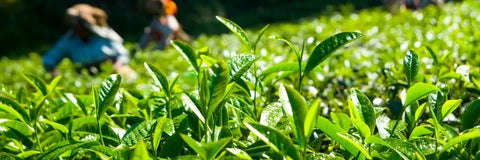
Weltweit wird jeglicher Tee aus camellia sinensis hergestellt. Das ist die „echte Teepflanze“, die ursprünglich aus Ostasien stammt, sich schließlich über den ganzen Globus verbreitete und zur Grundlage für jeden echten Tee wurde, von dem Sie je gehört haben.
In diesem Leitfaden erklären wir, was camellia sinensis Tee eigentlich ist, warum ein und dieselbe Pflanze je nach Verarbeitung so unterschiedlich schmecken kann und was die Leute meinen, wenn sie von camellia sinensis Samen sprechen.
Wir beantworten außerdem eine häufig gestellte Frage: Sind camellia sinensis -Pflanzen mehrjährig? (Ja) Zum Schluss geben wir einen klaren Überblick über die 6 echten Teesorten und die Inhaltsstoffe im Blatt, die den Tee so besonders machen.
Lasst uns anfangen zu wachsen!
Was ist camellia sinensis ?

Camellia sinensis ist ein immergrüner, blühender Strauch (oder kleiner Baum), der in Ostasien heimisch ist. Viele Botaniker halten Yunnan aufgrund der dort vorkommenden genetischen Vielfalt wilder Teebäume für eine der wahrscheinlichsten Ursprungsregionen.
Teepflanzen werden im Anbau normalerweise als niedrige Sträucher gehalten, um die Ernte zu erleichtern. Lässt man sie jedoch ungestört wachsen, kann camellia sinensis zu einem ausgewachsenen Baum von etwa 10–15 Metern Höhe heranwachsen und einen dicken Stamm entwickeln. Teepflanzen können Jahrzehnte alt werden, und in seltenen Fällen sind sogar mehrere hundert Jahre alte Exemplare dokumentiert.
Ursprung des Namens „ camellia sinensis “
Der Name ist im Grunde eine botanische Kurzform. „Camellia“ ist die Pflanzengattung, und „sinensis“ bedeutet „aus China“. Obwohl Tee heute überall angebaut wird, von Japan über Indien bis Kenia, spiegelt die Namensgebung seine historische Ursprungsgeschichte wider.
Sorten

Es gibt zwei Hauptarten von Teepflanzen, von denen man am häufigsten hört. Beide ergeben echten Tee, verhalten sich aber auf dem Feld und in der Tasse unterschiedlich.
Camellia sinensis var. sinensis
Dies ist die kleinblättrige Sorte, die oft mit China und Japan in Verbindung gebracht wird. Sie ergibt Tees mit einem feineren Aroma und gedeiht auch in kühleren Klimazonen. Viele japanische Grüntees werden aus Sinensis-Sorten und deren Züchtungen hergestellt.
Camellia sinensis var. assamica
Dies ist die großblättrige Teesorte, die vor allem mit Indien und Yunnan in Verbindung gebracht wird. Sie wird häufig für kräftige Schwarztees und viele dunkle/fermentierte Teesorten verwendet. Sie gedeiht in wärmeren, feuchteren Klimazonen und ergibt tendenziell einen dichteren, stärkeren Tee.
Camellia sinensis var. cambodiensis (der „Zwischentyp“)
Manchmal stößt man auch auf camellia sinensis var. cambodiensis, die auch als „Kambodschaner“ oder „Java-Strauch“ bezeichnet wird. Sie wird oft als Zwischenform zwischen Camellia sinensis und assamica beschrieben, mit Blattgröße und Wuchseigenschaften, die irgendwo dazwischen liegen. In der konventionellen Teeproduktion ist sie weniger verbreitet. Es ist aber wissenswert, denn es zeigt, wie vielfältig die Teepflanze sein kann, sobald sie sich an unterschiedliche Regionen und Klimazonen anpasst.
Wo Tee angebaut wird (einheimisch vs. eingeführt)

Obwohl camellia sinensis wahrscheinlich in Teilen Ost- und Südostasiens ihren Ursprung hat, wurde sie erfolgreich in viele andere Länder mit dem richtigen Klima und Boden eingeführt.
Einheimische Teeanbaugebiete
Die natürlichen Teeanbaugebiete konzentrieren sich hauptsächlich auf Südwestchina und angrenzende Teile Südostasiens, wo noch wilde Teebäume vorkommen. Dazu gehören Regionen wie China (insbesondere Yunnan) sowie Grenzgebiete und Nachbarländer wie Vietnam, Laos, Myanmar, Thailand und Teile Nordostindiens ( Assam ). Diese Gebiete bieten ideale Bedingungen für Tee: warme Temperaturen, saisonale Regenfälle, hohe Luftfeuchtigkeit und natürlich saure Böden in gebirgigen oder bewaldeten Gebieten.
Eingeführte Teeanbaugebiete
In eingeführten Teeanbaugebieten handelt es sich um Länder, in denen Tee nicht natürlich wächst, aber dennoch prächtig gedeiht, weil die Bedingungen für den Anbau ideal sind. Ein bekanntes Beispiel ist Japan. Tee wächst dort nicht heimisch, doch nachdem camellia sinensis eingeführt und angepflanzt wurde, gedieh er im feuchten Klima und den gemäßigten Bergregionen Japans hervorragend. Einer weit verbreiteten Legende zufolge begann der Teeanbau in der Nähe von Tempelanlagen bei Kyoto , und von dort aus entwickelte sich die Teekultur zu dem, was wir heute als japanischen Grüntee kennen.
Das gleiche Muster „eingeführt, aber erfolgreich“ trifft auch auf wichtige Teeanbauländer wie Sri Lanka, Kenia, die Türkei, Georgien und Indonesien zu, wo die Bauern die richtige Kombination aus Höhenlage, Niederschlag und kühleren Nächten gefunden haben, um qualitativ hochwertigen Tee in großem Umfang anzubauen.
Ohne diese frühen Reisen der camellia sinensis -Pflanzen und camellia sinensis -Samen gäbe es heute keine Teesorten wie matcha und sencha .
Der Lebenszyklus von Camellia sinensis: vom Samen bis zur Tasse

Camellia sinensis ist eine mehrjährige, immergrüne Pflanze, das heißt, sie behält ihre Blätter das ganze Jahr über und kann über Jahrzehnte hinweg Ernten liefern.
Alles beginnt mit einem Samen: Sobald dieser keimt, entwickelt die junge Pflanze zuerst Wurzeln und bildet dann langsam ihre Stängel und glänzenden Blätter aus.
Nach einigen Jahren erreicht die Pflanze ihre Reife und beginnt regelmäßig neue Blätter nachwachsen zu lassen, aus denen dann Tee hergestellt wird.
Teebauern ernten die jüngsten Knospen und die obersten Blätter, weil diese den größten Anteil an Aroma, Süße und Wirkstoffen enthalten.
Ab diesem Zeitpunkt hängt der fertige Tee von der Verarbeitung ab: Die Blätter können schnell erhitzt werden, um grünen Tee herzustellen, oxidiert für schwarzen Tee oder geformt und gereift werden für oolong , weißen oder dunklen Tee. Mit anderen Worten: Die Pflanze selbst bleibt gleich, aber die Schritte nach der Ernte entscheiden darüber, was letztendlich in Ihrer Teekanne landet.
Warum ein und dieselbe Pflanze so unterschiedlich schmecken kann (die Verarbeitung ist der Hebel)

Hier wird Tee interessant. Wenn camellia sinensis eine einzige Pflanze ist, warum kann dann der eine Tee grasig und spritzig schmecken, der andere nach Karamell und Trockenfrüchten und ein weiterer erdig und fermentiert?
Denn nach der Ernte stehen dem Erzeuger verschiedene „Stellhebel“ zur Verfügung. Die Verarbeitung entscheidet über nahezu alles.
Die 3 Dinge, die einen Tee prägen, noch bevor die Verarbeitung beginnt
1) Sorte (Genetik)
Innerhalb camellia sinensis gibt es unzählige Sorten, die auf bestimmte Eigenschaften gezüchtet werden: Süße, Aroma, Ertrag, Resistenz oder Umami. Deshalb kann ein matcha cremig schmecken, ein anderer hingegen herb und pflanzlich, selbst bei ähnlicher Verarbeitung.
2) Terroir (wo es angebaut wurde)
Bodenart, Niederschlag, Höhenlage, Temperaturschwankungen, Nebel und Sonneneinstrahlung beeinflussen die Entwicklung der Inhaltsstoffe und des Aromaprofils des Teeblatts. Deshalb kann ein und dieselbe Teesorte je nach Region unterschiedlich schmecken.
3) Pflücken (Knospen vs. Blätter, Jahreszeit, Erntezeitpunkt)
Die jüngsten Knospen und obersten Blätter sind in der Regel am nährstoffreichsten und enthalten die meisten wichtigen Inhaltsstoffe. Später geerntete Blätter können kräftiger, manchmal bitterer und oft weniger „frisch“ sein.
Die zentralen Verarbeitungshebel (die eigentliche Transformation)
Oxidation
Oxidation ist der Prozess, der ein frisches grünes Blatt dunkler und wärmer im Geschmack werden lässt. Ohne Oxidation entstehen helle Teesorten wie grüner Tee. Durch partielle Oxidation entsteht oolong . Vollständige Oxidation ergibt schwarzen Tee (in China und Japan auch „roter Tee“ genannt).
Hitzefixierung (Dämpfen vs. Pfannenbrennen)
Um den Tee „grün“ zu halten, erhitzen die Produzenten ihn, um die Oxidation zu stoppen. In Japan geschieht dies meist durch Dämpfen, in China oft durch Rösten in der Pfanne. Gleiches Prinzip, unterschiedliches Geschmacksergebnis.
Trocknen + Formen
Rollen, Drehen, Flachdrücken und kontrolliertes Trocknen verändern nicht nur das Aussehen des Tees. Sie beeinflussen auch die Extraktion, die Freisetzung des Aromas und wie gut das Blatt den Geschmack über die Zeit bewahrt.
Optionale „Upgrades“, die den fertigen Tee dramatisch verändern
Schattierung
Das Beschatten von Teepflanzen vor der Ernte verändert die chemische Zusammensetzung der Blätter. Die Pflanze bewahrt mehr Aminosäuren wie L -Theanin und produziert weniger bittere Catechine, was zu milderen, süßeren Tees führt. Deshalb schmecken beschattete Tees wie gyokuro und matcha so unterschiedlich.
Braten
Durch das Rösten werden Wärme und Tiefe hinzugefügt: nussige, karamellartige und kaffeeähnliche Noten. So erhalten Teesorten wie hojicha ihren charakteristischen Geschmack.
Gärung / Nachgärung
So entstehen dunkle Tees. Das Blatt verändert sich nach der Produktion durch mikrobielle Aktivität, Reifung oder kontrollierte Fermentationsprozesse weiter.
Mischen
Nicht alle Teesorten bestehen aus reinem Blatttee. Manche Sorten mischen camellia sinensis bewusst mit anderen Zutaten. Genmaicha ist ein perfektes Beispiel dafür: Hier wird Grüntee mit geröstetem Reis kombiniert.
Die 6 Sorten von camellia sinensis -Tee
Alle echten Teesorten stammen von camellia sinensis . Der Unterschied zwischen den Teesorten liegt in der Art der Verarbeitung der Blätter nach der Ernte.
Wie bereits erwähnt, stammen alle echten Tees von der Teepflanze (Camellia sinensis). Der Unterschied zwischen den Teesorten liegt in der Verarbeitung der Blätter nach der Ernte. Im Folgenden erfahren Sie, wie die verschiedenen Teesorten hergestellt werden.
Grüner Tee
Wenn der Produzent einen Für grünen Tee müssen die Blätter der Camellia sinensis fast unmittelbar nach der Ernte erhitzt werden. Dadurch werden die Enzyme Oxidase und Peroxidase deaktiviert, die den Tee sonst in schwarzen Tee verwandeln würden.
In China wird die Hitze üblicherweise durch Erhitzen in der Pfanne zugeführt, in Japan durch Dämpfen. Wenn Sie mehr über die Herstellung von Grüntee erfahren möchten, lesen Sie unseren Artikel 👉 Was macht einen Grüntee zu einem Grüntee?
Gelber Tee
Gelber Tee, die wohl am wenigsten bekannte Variante der Grünen Teepflanze (Camellia sinensis), ist fast identisch mit grünem Tee, abgesehen von einem einzigen Schritt: dem „Men Huang“, dem Gelbwerden. Dabei werden die frisch erhitzten Teeblätter leicht eingewickelt oder aufgehäuft und, traditionell, in Pergamentpapier oder Stoff eingewickelt, um die Restwärme und Feuchtigkeit zu bewahren. So können die Blätter der Grünen Teepflanze langsam und schonend in einer geschlossenen, feuchten Umgebung oxidieren, was den Geschmack abmildert und grasige Noten reduziert.
Weißer Tee
Weißer Tee ist die am wenigsten verarbeitete Variante der Blätter von Camellia sinensis. Es handelt sich im Wesentlichen um einen kontrollierten Trocknungsprozess, bei dem die Blätter nach der Ernte sorgfältig zum Welken in der Sonne ausgelegt werden.
Die Oxidation des Tees wird nicht durch Hitze gestoppt, sondern durch sorgfältiges Trocknen verlangsamt. Der Produzent muss die Temperatur und Luftfeuchtigkeit der Teeblätter genau regulieren. Zu hohe Luftfeuchtigkeit würde die Oxidation der Blätter begünstigen, zu viel Hitze hingegen würde sie rösten.
Oolong Tee
Oolong Tee ist die vielfältigste Teesorte und reicht vom hellen und duftenden Baozhong bis zum dunkel gerösteten Da Hong Pao . Oolong ist ein halb-oxidierter Tee, der geschmacklich zwischen grünem und schwarzem Tee liegt.
Die Blätter werden leicht gequetscht, um bestimmte Enzyme an die Oberfläche zu bringen und sie Sauerstoff auszusetzen. Anschließend wird die Oxidation durch Hitzeeinwirkung gestoppt. Dadurch entsteht bei grünen Oolongs ein aromatisches, blumiges Aroma.
Schwarzer/roter Tee
In China und Japan wird er roter Tee genannt, in Europa und Amerika hingegen schwarzer Tee. Dieser Tee wird aus oxidierten Blättern der Teepflanze (Camellia sinensis) hergestellt. Sobald die gepflückten Blätter mit Sauerstoff in Berührung kommen, wandeln sie Polyphenole in Theaflavine und Thearubin um.
Diese grasigen und pflanzlichen Noten weichen wärmeren Aromen von Karamell, Schokolade und Trockenfrüchten. Schwarzer Tee ist in Japan selten, aber wenn Sie mehr darüber erfahren möchten, können Sie unseren Artikel über japanischen schwarzen Tee lesen.
Fermentierter/Dunkler Tee
Die letzte Kategorie von Tee ist postfermentierter Tee oder dunkler Tee. Der bekannteste Tee dieser Kategorie ist Pu-Erh, der aus der Provinz Yunnan stammt und aus der großblättrigen Assamica Varietät der Camellia sinensis hergestellt wird.
Im Falle der Nadeshiko rose Die Teeblätter werden mit Koji-Sporen beimpft und unter kontrolliertem Druck fermentiert. Dadurch erhält der Tee ein erdiges und zugleich zitrusartiges Geschmacksprofil mit Noten von Erdbeere und Zimt.
Welche Verbindungen kommen in camellia sinensis vor?

Wenn Sie sich fragen, welche Inhaltsstoffe in camellia sinensis vorkommen, stellen Sie die richtige Frage. Hier liegen der Ursprung von Geschmack und Wirkung des Tees.
EGCG
EGCG (Epigallocatechingallat) ist eines der am besten untersuchten Antioxidantien im Tee und kommt besonders häufig in minimal oxidierten Teesorten wie grünem Tee und matcha vor.
L -Theanin
L -Theanin ist eine einzigartige Aminosäure, die hauptsächlich in Tee vorkommt. Sie ist mit dem ruhigen, konzentrierten Gefühl verbunden, das Teetrinker so schätzen, und trägt außerdem zum süß-würzigen Geschmack des Tees bei.
Koffein
Koffein ist das natürliche Stimulans im Tee. Tee wirkt tendenziell „sanfter“ als Kaffee, da Koffein im Teeblatt mit Theanin und Polyphenolen kombiniert ist. Wenn Sie empfindlich auf Koffein reagieren und nach Tees mit möglichst wenig Koffein suchen, lesen Sie unbedingt unseren vollständigen Ratgeber 👉 11 koffeinärmste Tees: von niedrig bis hoch
Polyphenole
Polyphenole sind eine breite Gruppe von Verbindungen, zu denen Catechine, Flavonoide und Tannine gehören. Sie spielen eine wichtige Rolle sowohl im Geschmack (Adstringenz) als auch in der gesundheitlichen Forschung rund um Tee.
Chlorophyll
Chlorophyll verleiht den Teeblättern ihre grüne Farbe und ist besonders in Schattentees wie matcha in hoher Konzentration vorhanden.
Flüchtige Verbindungen
Dabei handelt es sich um Aromamoleküle (wie Linalool und Geraniol), die blumige, fruchtige, grasige oder Röstnoten erzeugen. Das Aroma trägt maßgeblich zum Geschmack von Tee bei.
Sind camellia sinensis -Pflanzen mehrjährig (oder immergrün)?
Ja. Sind camellia sinensis mehrjährig? Absolut. Es handelt sich um immergrüne Sträucher, die viele Jahre leben und ihre Blätter das ganze Jahr über behalten. Teepflanzen folgen saisonalen Wachstumszyklen, wobei die begehrtesten Ernten in der Regel vom ersten Austrieb stammen.
Anzucht camellia sinensis -Samen (Kurzanleitung)
Wer zu Hause Tee anbauen möchte, beginnt mit Samen camellia sinensis , wobei die Frische eine große Rolle spielt.
Frische Samen 24 Stunden in zimmerwarmem Wasser einweichen und alle, die schwimmen, aussortieren. Keimfähige Samen etwa 2–3 cm tief in gut durchlässige, leicht saure Erde (pH 4,5–6) pflanzen. Die Erde sollte warm (20–25 °C), feucht und hell, aber nicht direkt besonnt sein.
Halten Sie die Erde feucht, aber niemals nass. Die Keimung kann 4–8 Wochen dauern. Sobald die Sämlinge mehrere echte Blätter entwickelt haben, erhöhen Sie die Lichtmenge allmählich und schützen Sie sie vor Frost und starker Mittagssonne, bis sie angewachsen sind.
Wenn Sie die vollständige Anleitung wünschen, können Sie unseren Artikel über den Anbau von Teeblättern lesen.
Schlussgedanken
Nun kennen Sie also die große Wahrheit: camellia sinensis ist die Pflanze, die hinter jedem echten Tee der Welt steht. Was sich ändert, ist nicht die Pflanze selbst, sondern die Entscheidungen, die nach der Ernte getroffen werden.
Sobald man die Verarbeitungsprozesse verstanden hat, wird der Teekauf einfacher, die Verkostung einfacher und, ehrlich gesagt, die Erkundung neuer Teesorten macht mehr Spaß.
Nun braue etwas und erlebe die Wissenschaft selbst.


Kommentare (0)
Es gibt noch keine Kommentare. Sei der Erste, der einen Beitrag schreibt!